Toyota Obd2 Scanner Uk Explained: A UK Buyer's Guide
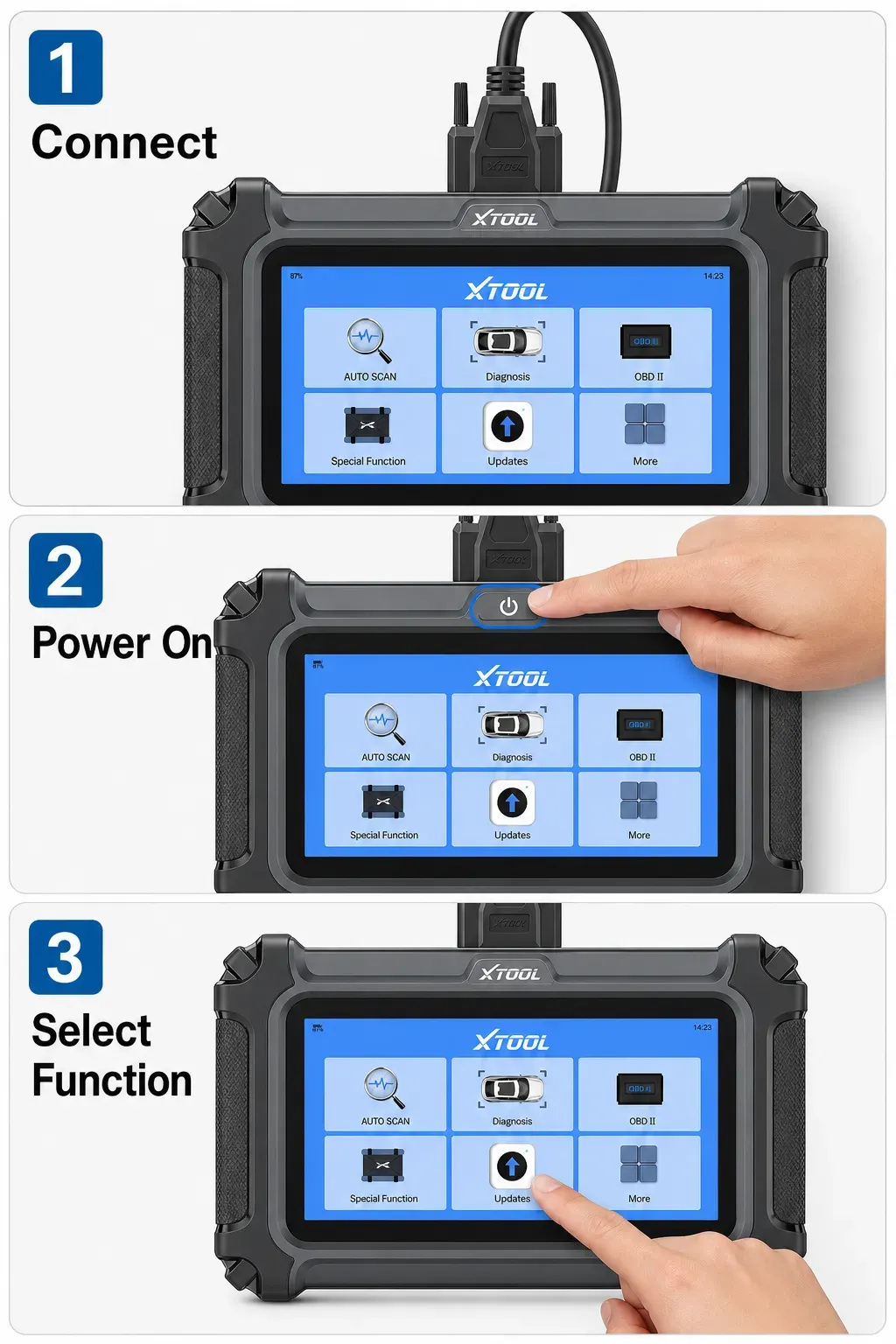
TL;DR / Quick Summary:
A Toyota OBD2 scanner in the UK is a diagnostic tool that plugs into your vehicle's 16-pin port to read fault codes, clear warning lights (ABS, SRS, Check Engine), run service functions, and check hybrid traction battery health. Based on testing at ScanXTool, choosing a dedicated Toyota scanner provides dealer-level coverage and saves UK motorists £90 to £180 + VAT per visit compared to main dealer rates.
A Toyota OBD2 scanner in the UK is a specialized diagnostic device that connects to your vehicle's 16-pin On-Board Diagnostics port to read and clear diagnostic trouble codes (DTCs), display real-time sensor streams, and execute crucial maintenance procedures across petrol, diesel, and hybrid models. For UK motorists looking to avoid main dealer diagnostic fees of £90 to £180 + VAT, acquiring a dedicated OBD2 scanner delivers instant access to factory-level error reporting without waiting weeks for an open garage appointment.
Seeing a sudden engine warning lamp, ABS light, or the dreaded "Check Hybrid System" message on your Toyota dashboard can trigger immediate financial dread. However, for UK drivers owning a Yaris, Auris, Corolla, RAV4, or Hilux, booking an appointment at a main dealership is no longer the only option. Possessing dealer-level diagnostic capability puts full control back into your hands rather than guessing which sensor has failed or paying inflated hourly labour rates at local garages.
Based on extensive testing at ScanXTool across multiple UK vehicle generations, choosing the correct tool depends on whether you require basic engine code clearing or comprehensive multi-system servicing. Consequently, this guide breaks down everything UK car owners and independent mechanics must consider when selecting an OBD2 scanner specifically engineered for Toyota vehicles.
Can Any OBD2 Reader Work on a Toyota in the UK?
Many UK car owners purchase generic £15 to £30 OBD2 dongles online, expecting comprehensive diagnostic insight, only to discover their severe limitations during an actual vehicle fault. Furthermore, understanding the architectural difference between basic emission scanning and proprietary vehicle diagnostics explains why these budget tools frequently fall short.
Standardised OBD2 vs Toyota Factory Protocols
Legally mandated OBD2 protocols (ISO 15765-4 CAN, ISO 9141-2, and KWP2000) require car manufacturers to expose basic emissions-related data on the Powertrain Control Module (PCM). Basic OBD2 code readers can only query this narrow band of data, retrieving generic trouble codes such as P0300 (cylinder misfire) or P0420 (catalytic converter efficiency).
In contrast, Toyota vehicles rely on complex proprietary communication networks linking dozens of electronic control units (ECUs). Standard readers cannot interface with these sub-systems. Therefore, if your Toyota experiences a fault within any of the following modules, a generic OBD2 tool will report zero codes stored:
- HV Battery & Hybrid Control Computer: Monitoring battery cell voltage differentials, cooling fan speeds, and inverter temperatures.
- ABS / VSC / TRC Module: Electronic stability control, wheel speed sensors, and regenerative braking actuators.
- SRS Airbag System: Seat occupancy sensors, side impact sensors, and clock spring continuity.
- Body Control Module (BCM): Central locking, electric windows, immobiliser state, and smart key registration.
- Electric Power Steering (EPS): Torque sensor alignment and assistance motor performance.
"Relying on a generic code reader for a modern hybrid Toyota is like using a stethoscope to inspect tyre tread. It simply cannot access the electronic systems doing the heavy lifting."
What Features Should You Look For in a UK Toyota OBD2 Scanner?
To perform complete home maintenance or professional independent servicing, your diagnostic scanner must support specific hardware capabilities and software routines adapted for UK road conditions and vehicle specifications. Based on our practical workshop evaluations at ScanXTool, we recommend prioritizing the following key capabilities.
1. Full-System Diagnostic Scanning
A true Toyota diagnostic scanner scans every ECU fitted to your vehicle. Consequently, it reads both active faults and historical shadow codes, offering detailed manufacturer-specific diagnostic trouble codes (DTCs) alongside clear plain-English descriptions rather than cryptic code numbers.
2. Bidirectional Control (Active Actuator Testing)
Reading code descriptions is only half the battle. Bidirectional capability allows your scanner to send functional commands directly to vehicle components. Instead of replacing parts on suspicion, you can actively toggle solenoids and relays from the handheld screen. Key bidirectional tests on UK Toyotas include:
- Actuating the A/C compressor clutch and radiator cooling fans.
- Cycling individual ABS solenoid valves during brake fluid bleeding.
- Switching the fuel pump relay on or off to test line pressure.
- Commanding the EGR (Exhaust Gas Recirculation) valve to test position feedback sensors.
- Opening or closing EVAP purge canisters to trace vacuum leaks.
3. Dedicated Service Resets for UK Servicing
Routine maintenance on modern Toyotas requires electronic tool intervention. Without dedicated service reset commands, routine mechanical work can leave warning lights active on your instrument cluster or put the vehicle into a restricted performance state. According to UK MOT guidelines, active warning lights for ABS or SRS will result in an immediate MOT test failure. Therefore, look for tools offering:
- EPB Service Mode: Retracting the electronic rear parking brake calipers on models like the C-HR, RAV4, and Auris so you can safely change brake pads without damaging internal servo motors.
- ABS Automated Brake Bleeding: Cycling the internal pump valves to purge air pockets from the hydraulic brake lines—an absolute necessity on electronic brake control (EBC) systems.
- DPF Forced Regeneration & Reset: Triggering soot burn-off on D-4D diesel engines (found in Hilux, Land Cruiser, and older RAV4 models) clogged by frequent short urban trips around UK cities.
- Steering Angle Sensor (SAS) Calibration: Re-aligning zero-point calibration after suspension alignment work or steering rack repair.
- Injector Coding: Writing unique individual compensation codes into the ECU when installing replacement diesel injectors.
4. Specialist Toyota Hybrid Diagnostics
With millions of Toyota hybrids (Prius, Yaris Hybrid, Auris, Corolla) on UK roads, inspecting the Hybrid Traction Battery is paramount. Based on our testing, generic OBD2 tools fail to read individual block voltages or monitor the Delta State of Charge (SOC). A specialized Toyota OBD2 scanner provides real-time monitoring of all hybrid battery blocks, internal resistance, and cooling fan speeds. As a result, UK owners can spot failing cells early and prevent catastrophic high-voltage system failures.
Frequently Asked Questions About Toyota OBD2 Scanners in the UK
Where is the OBD2 port located on a UK Toyota?
On right-hand drive (RHD) UK Toyota models, the 16-pin OBD2 port is typically located underneath the driver's side dashboard, just above the pedals or near the bonnet release latch. In some models like the Yaris or RAV4, it may be positioned behind a removable plastic trim cover near the fuse box.
Will a Toyota OBD2 scanner clear the "Check Hybrid System" warning?
Yes, a dedicated full-system Toyota OBD2 scanner can read the underlying hybrid system trouble codes and reset the light. However, if the root cause—such as a failed traction battery module or faulty inverter pump—is not resolved, the warning light will reappear after starting the vehicle.
Is buying a Toyota OBD2 scanner worth it for UK motorists?
Absolutely. Considering UK main dealers charge between £90 and £180 + VAT just to plug in a diagnostic scanner, purchasing your own dedicated ScanXTool OBD2 device pays for itself during its very first diagnostic scan or maintenance reset.
Ready to upgrade your garage with ScanXTool?
Shop IP500-TLS Now — £173.99