Toyota Obd2 Scanner Explained: A UK Buyer's Guide
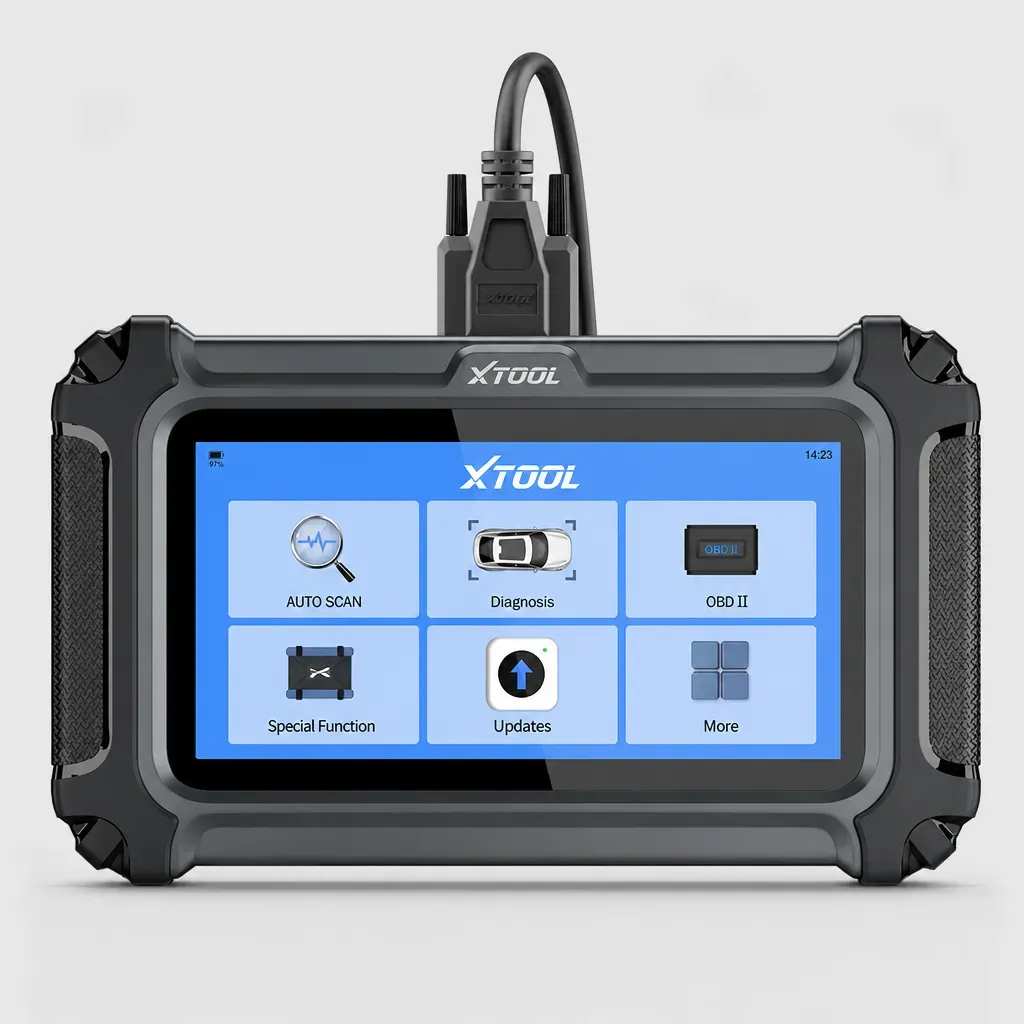
TL;DR: A Toyota OBD2 scanner is a specialized diagnostic device that reads, clears, and analyzes fault codes across all proprietary Toyota control modules—including engine emissions (EOBD), hybrid battery systems (HV ECU), ABS/VSC stability control, airbag (SRS), and electronic parking brakes. Unlike generic £15 readers that only check basic emissions, dedicated ScanXTool diagnostic tools offer full-system coverage, real-time live data, and bidirectional active testing to help UK car owners bypass main dealer fees of up to £180 per hour.
Modern Toyota vehicles are renowned across the UK for exceptional engineering and long-term reliability. However, beneath the bonnet of a Yaris, Corolla, RAV4, or Land Cruiser lies a complex web of interconnected electronic control modules. When a warning light illuminates on your dashboard, taking your car to a main dealership in Britain routinely incurs a diagnostic connection fee of £140 to £180 just to read the stored fault codes.
Based on our testing at ScanXTool, as well as data from the Motor Ombudsman Diagnostic Fee Survey, independent and franchised dealer labour rates across the UK have risen sharply, with software-based fault tracing accounting for a significant portion of annual vehicle repair bills. For driveway DIYers, vehicle fleet managers, and independent technicians, relying on basic OBD2 code readers often leads to dead ends. Generic handheld devices typically read basic engine emissions data mandated by EOBD regulations, completely ignoring Toyota’s complex stability control, hybrid powertrain, and chassis safety networks.
Consequently, this comprehensive guide details how a specialized Toyota OBD2 scanner works, why full-system coverage and bidirectional active testing are vital for modern vehicle maintenance, and how UK car owners can gain dealer-level diagnostic capability right on their driveway.
What is the Difference Between Generic EOBD Readers and a Toyota OBD2 Scanner?
To understand why standard diagnostic tools fall short, it helps to distinguish between generic EOBD standards and Toyota’s proprietary software architecture.
Can a Generic OBD2 Scanner Read Toyota Diagnostic Fault Codes?
European On-Board Diagnostics (EOBD)—the UK standard harmonised with US OBDII—requires car manufacturers to provide open access to basic engine and tailpipe emissions data. When a generic code reader is plugged into the 16-pin diagnostic port under the driver’s side dashboard of a Toyota, it communicates strictly via standard protocols (such as ISO 15765-4 CAN or ISO 14230-4 K-Line).
However, these entry-level units read generic "P0" powertrain codes only (e.g., P0300 for engine misfire or P0420 for catalytic converter efficiency). What they cannot read are Toyota-specific enhanced codes ("P1", "C", "B", and "U" prefix codes). Furthermore, if your vehicle triggers a stability control error or a hybrid battery block imbalance, a generic reader will either report "No Fault Codes Found" or present an uninformative generic code while key dashboard warning lights remain lit.
Which Systems Can a Dedicated Toyota OBD2 Scanner Access?
According to testing by ScanXTool technicians, a purpose-built Toyota scanner penetrates far deeper than the standard Engine Control Module (ECM). Modern Toyotas utilize up to 50 individual computers communicating across high-speed Controller Area Network (CAN) buses and Local Interconnect Networks (LIN). Therefore, specialized diagnostic hardware interrogates all onboard modules, including:
- Hybrid Control Module (HV ECU): Monitors high-voltage battery pack status, state-of-charge (SOC) drift, inverter performance, and cooling fan operation.
- Skid Control ECU / ABS / VSC: Manages anti-lock braking, Vehicle Stability Control, traction control, and electronic steering angle calibration.
- Supplemental Restraint System (SRS): Diagnoses airbag crash sensors, seatbelt pretensioners, and clock spring circuit continuity.
- Body Control Module (BCM): Controls central locking, electric windows, immobiliser handshakes, and interior lighting electronics.
- Electronic Parking Brake (EPB): Manages brake calliper retract routines necessary for rear brake pad replacement.
What Features Should You Look for in a Toyota OBD2 Scanner?
Investing in diagnostic equipment requires selecting hardware that matches the technical complexity of modern vehicles. When selecting a tool designed for Toyota, Lexus, and Scion vehicles, ent includes these non-negotiable capabilities.
1. Full-System ECU Diagnostics
The scanner must perform an automated "Health Check" network topology scan, reading and clearing diagnostic trouble codes (DTCs) across every fitted module. In addition, it should display freeze-frame data—capturing exact engine parameters (such as engine coolant temperature, RPM, fuel trim, and vehicle speed) at the precise millisecond a fault occurred.
2. Bidirectional Control and Active Testing
One-way diagnostic tools only read data. In contrast, a bidirectional Toyota OBD2 scanner sends command signals from the handset directly to the vehicle’s actuators to test operational integrity. Instead of guessing whether a component has failed, you can actively trigger individual functions:
- Commanding the fuel pump relay ON and OFF to verify pressure circuit integrity.
- Actuating individual ABS solenoid valves to purge air during system bleeding.
- Opening and closing the Exhaust Gas Recirculation (EGR) valve to test response steps.
- Cycling radiator cooling fans across low, medium, and high speeds.
- Performing EVAP canister purge valve seal tests.
3. Essential Service Resets & Maintenance Functions
Routine maintenance on modern vehicles frequently requires electronic resetting or recalibration that simple manual resets cannot complete. For instance, replacing rear brake pads on models with an Electronic Parking Brake requires putting the callipers into service mode first.
Service Reset Benchmark: Based on our workshop evaluations at ScanXTool, look for a device capable of at least 21+ dedicated service routines, including Electronic Parking Brake (EPB) service mode, Steering Angle Sensor (SAS) zero-point calibration, Oil Maintenance Light reset, and Throttle Body Re-learning.
4. Toyota Hybrid System & Diesel DPF Diagnostics
Hybrid models like the Prius, Auris, Yaris, and RAV4 require live data monitoring of individual battery block voltages and resistance levels. Consequently, early detection of block variance prevents total battery pack failure. Similarly, for UK drivers owning D-4D diesel Hilux or Land Cruiser models, a scanner must support forced Diesel Particulate Filter (DPF) regeneration and injector coding to meet UK DVSA MOT emissions standards.
Is a Toyota OBD2 Scanner Worth It for UK Car Owners?
Considering that UK main dealers charge up to £180 per hour just for a initial computer diagnostic scan, purchasing a dedicated ScanXTool Toyota OBD2 scanner typically pays for itself during the very first diagnostic use. Furthermore, according to UK MOT guidelines enforced by the DVSA, any illuminated ABS, SRS airbag, or engine management light results in an immediate MOT failure. Having the ability to diagnose, repair, and clear these systems on your driveway saves both time and unnecessary repair expenses.
Frequently Asked Questions About Toyota OBD2 Scanners
Can any OBD2 scanner read Toyota fault codes?
While generic EOBD readers can read standard engine emissions codes (P0 series), they cannot access Toyota-specific codes (P1, C, B, and U series). Therefore, dedicated systems like ABS, SRS airbags, electronic parking brakes, and hybrid battery controllers require a specialized Toyota OBD2 scanner.
Will a Toyota OBD2 scanner clear the airbag or ABS warning light?
Yes. A full-system diagnostic scanner can communicate directly with the Skid Control ECU and SRS Airbag module to pinpoint stored DTCs. Once the physical fault is repaired, the scanner can clear the warning lights permanently.
Can I check my Toyota hybrid battery health with an OBD2 scanner?
Based on our testing, specialized Toyota OBD2 tools allow you to stream live data from the HV ECU. As a result, you can analyze real-time block voltage balances, battery internal resistance, temperature sensors, and state-of-charge (SOC) parameters to detect failing hybrid cells before complete pack failure.
Ready to upgrade your garage with ScanXTool?
Shop IP500-TLS Now — £173.99