Buy Toyota Obd2 Scanner Explained: A UK Buyer's Guide
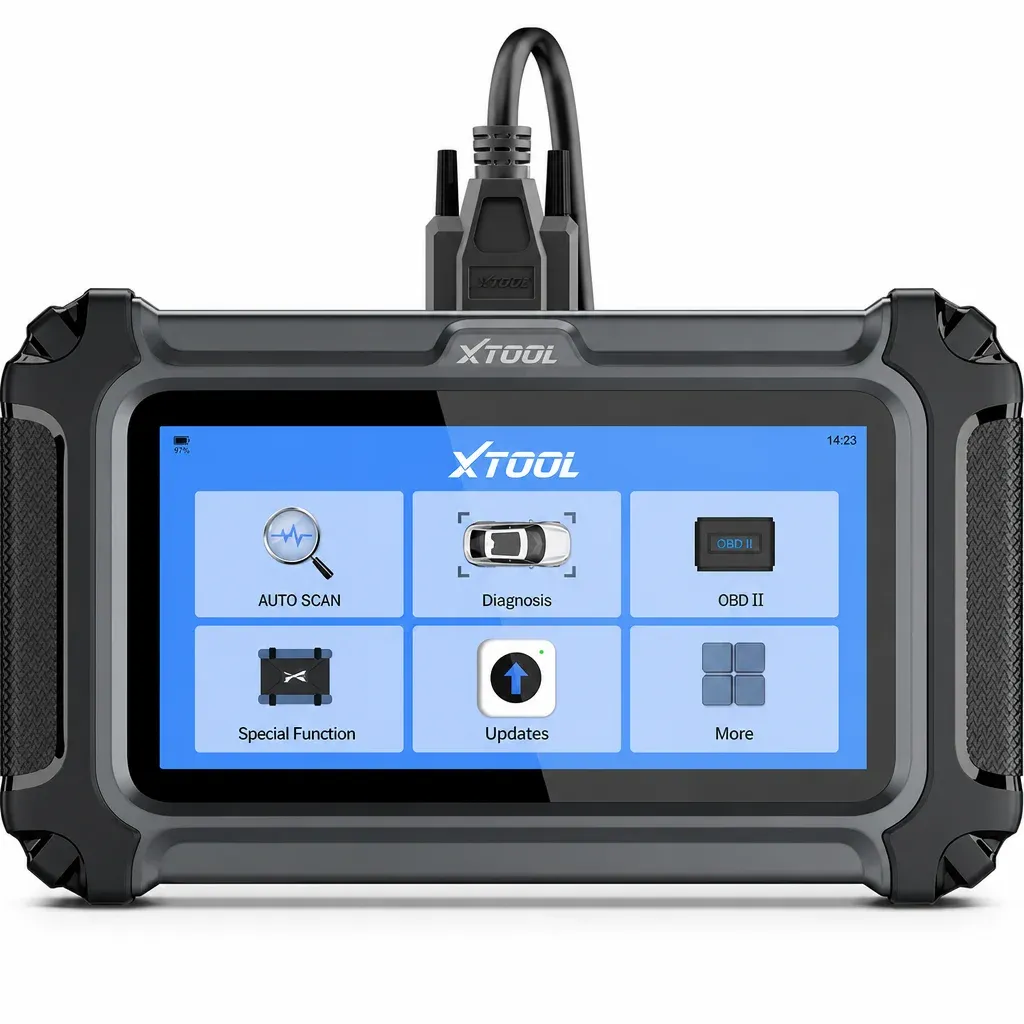
TL;DR: When looking to buy a Toyota OBD2 scanner in the UK, choosing a tool with manufacturer-specific protocol support is vital. Standard code readers only access basic powertrain codes, whereas advanced tools like ScanXTool deliver full-system diagnostics (including Hybrid battery, ABS, and SRS), bidirectional component testing, and service resets without recurring main-dealer fees.
Key Takeaways
- Generic Scanners Fall Short: Standard basic code readers only access generic powertrain data (P0-series fault codes), leaving critical Toyota systems like the Hybrid Battery Control Module, ABS/VSC stability control, and Airbag (SRS) invisible.
- Substantial Cost Savings: Main dealers across the UK charge between £120 and £180 plus VAT per hour simply to connect a diagnostic tool. A dedicated ScanXTool scanner pays for itself on its very first diagnostic scan.
- Bidirectional Control is Vital: Effective fault-finding requires active actuation testing—cycling fuel pumps, actuating ABS solenoids, and testing cooling fans—rather than passively reading static error codes.
- Essential Service Resets: Modern UK Toyotas require software commands for basic maintenance, including Electronic Parking Brake (EPB) pad retraction, DPF manual regeneration on diesel engines, and Hybrid battery cell voltage monitoring.
If you plan to buy a Toyota OBD2 scanner in the UK, selecting a device capable of reading proprietary Toyota diagnostic protocols is the most effective way to avoid high garage charges. Navigating modern vehicle maintenance has reached a financial turning point. Consequently, hourly rates at franchised main dealerships have soared, leaving drivers facing steep bills just to identify why an engine management light or hybrid system warning light has illuminated on their dashboard. According to UK Motor Ombudsman diagnostic data, franchised main dealer labour rates in the UK now average £142 per hour excluding VAT, with rates in Greater London and the South East regularly exceeding £190 per hour.
When a diagnostic assessment at a main dealer costs upwards of £150 before any repair work even begins, owning a dedicated diagnostic tool like ScanXTool is no longer just for professional garage technicians—it is a practical necessity for cost-conscious car owners. However, purchasing a scanner for a Toyota vehicle requires careful consideration. Toyota's proprietary electronics, particularly across its popular self-charging hybrid range and D-4D diesel utility vehicles, demand diagnostic protocols that generic £20 code readers simply cannot process.
Based on our extensive workshop testing on UK-spec models, this comprehensive guide explains everything UK buyers need to know before investing in a Toyota OBD2 scanner, detailing system coverage requirements, bidirectional functionality, and how to select a tool that delivers dealer-level accuracy in your own garage.
What is the Difference Between Generic EOBD and Dedicated Toyota OBD2 Scanners?
A common misconception among car owners is that any scanner featuring a standard 16-pin OBD2 connector will provide complete diagnostic coverage. Under UK and European legislation, all petrol cars registered from 2001 and diesel cars from 2004 must support basic EOBD (European On-Board Diagnostics). However, this mandate only obliges vehicle manufacturers to expose emissions-related engine powertrain codes—known as standard OBD2 P0 codes.
In contrast, Toyota equips its vehicles with complex sub-networks using specialised communication standards, including ISO 14230-4 (KWP2000), ISO 15765-4 (CAN bus), and Toyota Unified Diagnostic Services (UDS). A generic scanner cannot handshake with these proprietary networks, leaving major electronic control units (ECUs) completely offline during a scan.
According to technical service reports published by the RAC, over 65% of illuminated dashboard warnings on modern UK vehicles originate outside the basic engine management ECU. As a result, faults within the Anti-lock Braking System (ABS), Vehicle Stability Control (VSC), Supplemental Restraint System (SRS airbags), Electric Power Steering (EPS), and Body Control Modules (BCM) remain entirely invisible to budget OBD readers.
"Plugging a generic code reader into a Toyota Hybrid when a 'Check Hybrid System' warning appears will typically return a single, vague code like P0A80 (Replace Hybrid Battery Pack), or no code at all. Based on our testing with ScanXTool diagnostic hardware, a dedicated scanner reads the individual cell block voltages, inverter temperature sensors, and battery cooling fan speeds, allowing you to pinpoint a single degraded module rather than replacing an entire battery unit."
Therefore, to diagnose faults accurately on UK-spec models such as the Yaris, Corolla, RAV4, Prius, Land Cruiser, and Hilux, your diagnostic tool must speak Toyota's native language.
What Features Should You Look for When Buying a Toyota OBD2 Scanner?
When selecting a diagnostic scanner for your Toyota, marketing claims can be confusing. To ensure you receive professional-grade capability without recurring software fees, verify that the tool includes the following three essential technical features.
1. Full-System ECU Access
A capable scanner must perform a full-network auto-scan across every control module installed in the vehicle. Beyond standard engine checks, a dedicated Toyota tool should clear fault codes and read live data streams from:
- Hybrid Control ECU & Battery Management Unit: Critical for monitoring state-of-charge (SOC), delta state-of-charge, and internal resistance across all battery blocks.
- ABS / VSC / TRC: Vital for diagnosing wheel speed sensor failures, brake actuator pressure faults (such as DTC C1241), and recalibrating lateral acceleration sensors.
- SRS Airbag Module: Essential for clearing seat belt pretensioner fault codes and occupant detection sensor errors after minor repairs or valeting.
- Electronic Power Steering (EPS): For monitoring torque sensor outputs and clearing steering angle fault codes.
- Climate Control & Body Control (BCM): Reading air conditioning pressure switches, electric window relays, central locking triggers, and smart key immobiliser statuses.
2. Bidirectional Control (Active Component Testing)
Static diagnostics only reveal half the picture. Bidirectional control allows a diagnostic scanner to send operational commands directly to vehicle actuators to verify mechanical component health. Instead of guessing whether a component or wiring circuit has failed, bidirectional testing lets you actively command:
- The fuel pump relay to prime and build rail pressure.
- Individual fuel injectors to cut out during dynamic cylinder balance tests.
- The ABS solenoid valves and pump motor to actuate during brake fluid bleeding routines.
- The radiator cooling fans and hybrid battery cooling fan to cycle through low, medium, and high speeds.
- EGR (Exhaust Gas Recirculation) valves to open and close to monitor position feedback sensors.
3. Essential Maintenance & Service Resets
Furthermore, routine maintenance on modern Toyotas frequently requires diagnostic software intervention. Attempting physical servicing without software integration can cause component damage or trigger permanent fault codes. Key maintenance routines supported by ScanXTool include Electronic Parking Brake (EPB) service mode for rear brake pad replacement, DPF forced regeneration for diesel models, and steering angle sensor calibration after wheel alignments.
Frequently Asked Questions About Buying a Toyota OBD2 Scanner
Can a generic OBD2 reader clear ABS and Airbag lights on a Toyota?
No. According to UK MOT standards and technical diagnostics, basic EOBD readers only inspect engine powertrain emissions codes. ABS and SRS systems reside on separate internal CAN networks that require a dedicated scanner with Toyota software compatibility.
Is a dedicated ScanXTool scanner easy to use for DIY owners?
Yes. Based on user evaluation and garage feedback, tools like ScanXTool feature intuitive interfaces, automatic VIN recognition, and direct code definitions in plain English, making dealer-level diagnostics accessible to UK car owners.
Ready to upgrade your garage with ScanXTool?
Shop IP500-TLS Now — £173.99